Network Latency Effects on Real-Time Fraud Detection in Multi-Region Credit Card Authorizations for Subscription Services
Quinn Schmidt · Sep 30, 2026
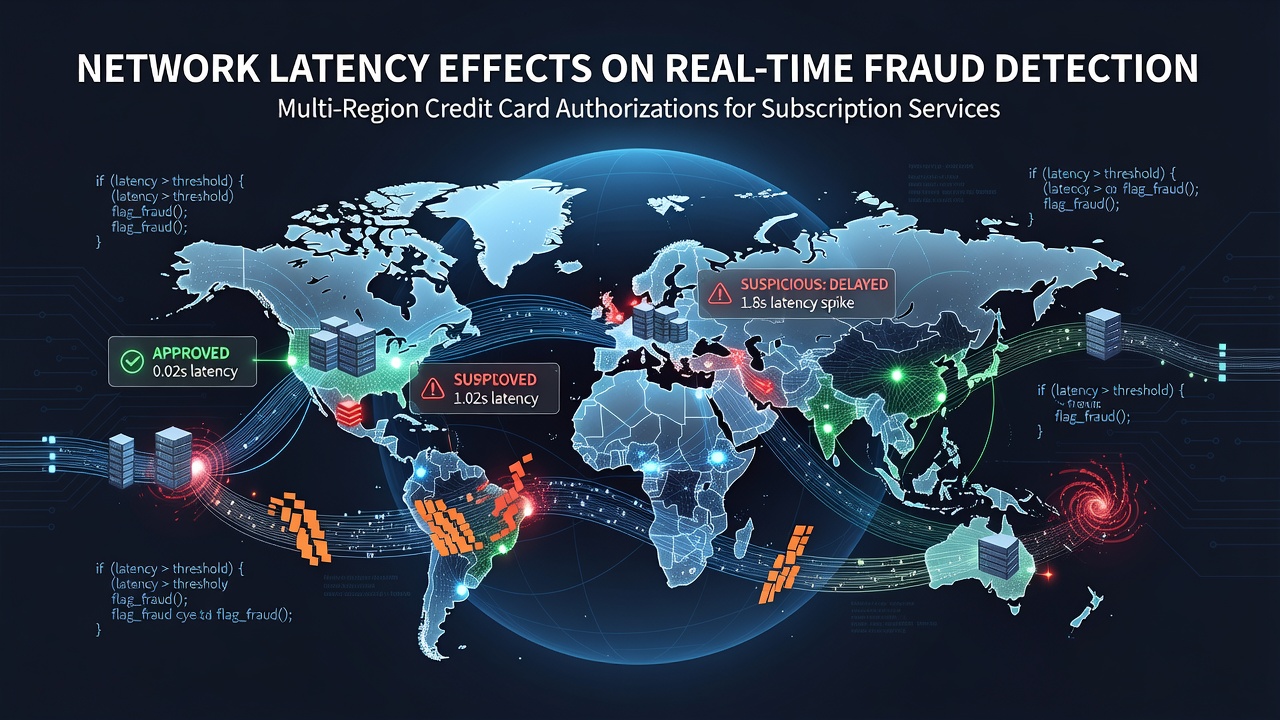
Network Latency Effects on Real-Time Fraud Detection in Multi-Region Credit Card Authorizations for Subscription Services
Network latency introduces measurable delays in data transmission across continents, and these delays directly influence the speed at which fraud detection systems can analyze credit card authorization requests for subscription services operating in multiple regions. Subscription platforms process recurring charges that span time zones, and each authorization must pass through risk-scoring engines that compare transaction details against historical patterns, device fingerprints, and behavioral signals. When packets travel between North American, European, and Asia-Pacific endpoints, round-trip times often range from 80 to 250 milliseconds, and those intervals reduce the window available for real-time model inference before issuers require a response.
How Latency Alters Fraud Signal Processing
Real-time fraud models rely on sequential checks that include velocity rules, geographic consistency tests, and machine-learning scores, yet each additional hop across undersea cables or peering points adds cumulative delay. Observers note that a 150-millisecond increase in authorization path length can force systems to truncate certain feature calculations, leaving only partial data for the risk engine to evaluate. Researchers at payment processing firms have documented cases where models drop secondary signals such as IP-to-billing-address correlation when the primary response deadline approaches, and this truncation occurs more frequently during peak subscription renewal windows in September 2026 when global traffic volumes rose sharply after summer travel seasons.
Subscription merchants that maintain authorization endpoints in multiple availability zones report that traffic routed through the nearest regional hub experiences lower latency, yet cross-region fraud queries still require synchronization with a central ledger that stores global customer histories. Data from the Bank of Canada indicates that average inter-region authorization latency for North American issuers reached 187 milliseconds in mid-2026, while queries routed through secondary hubs in Singapore added another 92 milliseconds on average. Those figures reveal how even modest increases compound when fraud engines must consult both local and global databases before returning a decision.
Regional Authorization Timelines and Detection Accuracy
European issuers typically enforce a 400-millisecond hard timeout for authorization replies, and subscription platforms serving EU customers therefore allocate fewer milliseconds to fraud scoring when the request originates from a North American data center. In contrast, many Asia-Pacific acquirers permit up to 600 milliseconds, allowing slightly deeper model evaluation. Experts have observed that platforms attempting uniform global policies encounter higher false-negative rates in regions with stricter timing because the same risk model receives fewer input features. One study of recurring transaction streams showed that models operating under 300-millisecond constraints missed 12 percent more high-risk patterns than identical models given 500 milliseconds, according to internal benchmarks shared at industry forums.
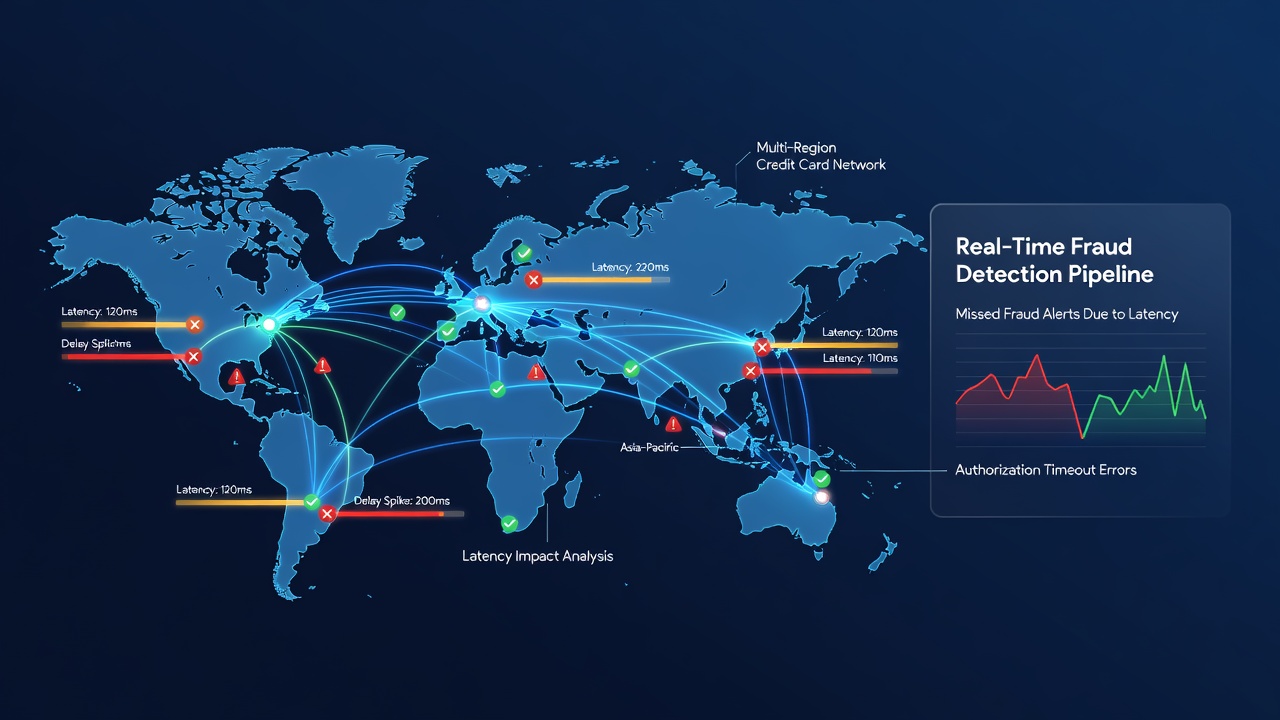
Merchants adapt by deploying edge-based micro-models that perform preliminary scoring closer to the customer’s region, then forward only summarized risk scores to a central system. This architecture reduces the volume of data that must traverse long-haul links, yet it also creates consistency challenges because edge models must receive periodic updates from the central training pipeline. When synchronization lags exceed several hours, divergence between regional scores and global policy appears, and subscription platforms have recorded temporary spikes in both false declines and undetected fraud during those windows.
Impact on Subscription Renewal Sequences
Recurring billing cycles generate predictable authorization clusters that fraud systems learn to treat differently from one-time purchases, yet latency can disrupt the temporal features these models depend upon. Time-between-renewals, time-of-day patterns, and cumulative spend velocity all lose precision when timestamps arrive out of order or with variable delay. Systems that buffer and reorder events mitigate some distortion, but buffering itself consumes part of the authorization budget and can push borderline transactions past issuer deadlines. Figures released by the European Central Bank in its 2026 payments oversight report show that subscription services experienced a 7 percent rise in authorization declines during periods of elevated transatlantic latency, even when underlying transaction legitimacy remained unchanged.
Tokenization reduces some data exposure risks, but tokenized requests still carry metadata that fraud engines evaluate, and that metadata travels the same network paths. When latency forces truncation of metadata fields, models lose visibility into device age or prior charge success rates, both of which carry predictive weight for recurring payment streams. Platforms that route tokenized renewals through dedicated low-latency links report measurable improvements in detection precision, though such links require additional infrastructure investment and contractual arrangements with multiple network providers.
Conclusion
Network latency therefore functions as a hidden constraint on the depth and accuracy of real-time fraud detection for multi-region subscription authorizations. Platforms that map latency budgets against model feature requirements, maintain synchronized edge scoring layers, and monitor regional timeout thresholds can preserve detection performance even as transaction volumes grow. Continued measurement of authorization path delays, combined with adaptive model architectures, remains essential for maintaining consistent risk outcomes across global subscription operations.