Ledger Matching Protocols and Their Influence on Cash Flow Predictability for Vendors Managing Recurring Mobile Transactions Across Currency Zones
Kai Brooks · Jul 28, 2026

Ledger Matching Protocols and Their Influence on Cash Flow Predictability for Vendors Managing Recurring Mobile Transactions Across Currency Zones
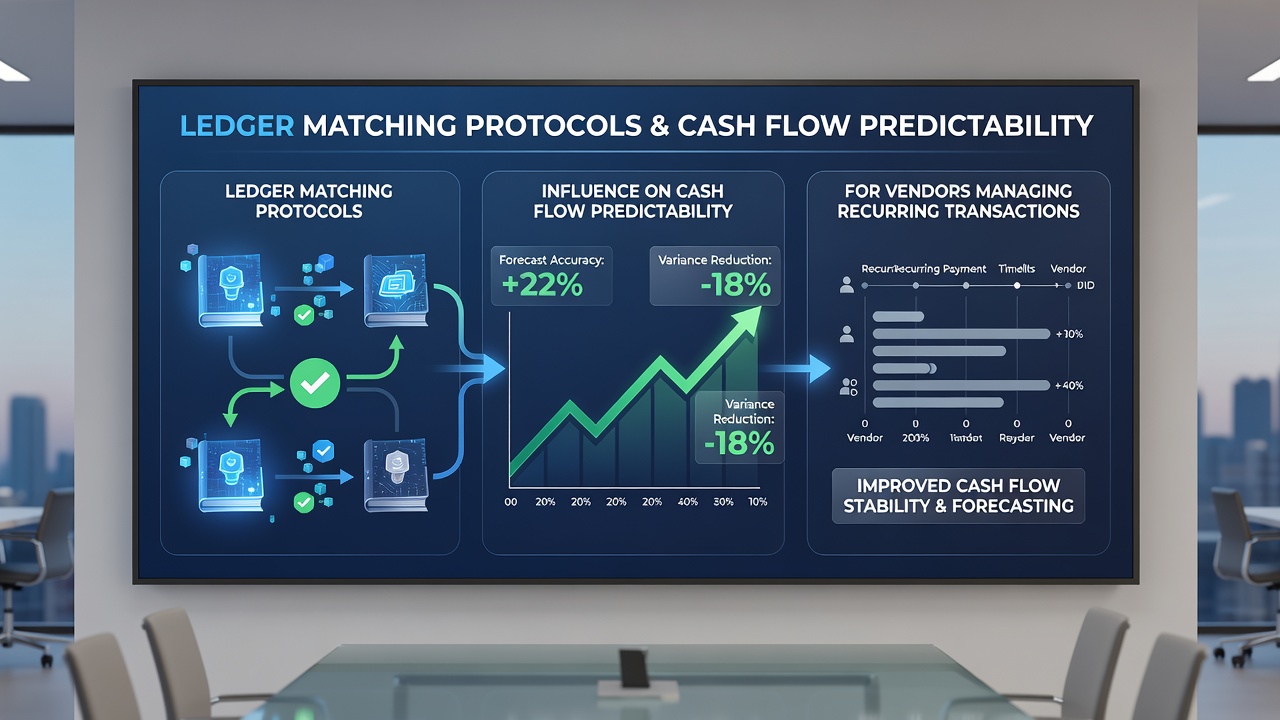
Recurring mobile transactions span borders daily, and vendors track every renewal through systems that match ledger entries across different currencies. These protocols align incoming payments with expected amounts, adjust for exchange rate shifts, and record settlements in real time so cash flow forecasts stay anchored to actual data rather than estimates.
How Ledger Matching Protocols Operate in Multi-Currency Environments
Protocols pull transaction records from mobile gateways, compare them against vendor ledgers, and flag discrepancies caused by currency conversion delays or rounding differences. Automated matching rules apply predefined tolerance thresholds, while exception queues route unmatched items for manual review. In July 2026, several payment platforms updated their matching engines to incorporate intraday FX rate feeds, which reduced the average time between transaction initiation and ledger confirmation from 48 hours to under 12 hours according to aggregated industry benchmarks.
Vendors handling subscription renewals notice that matched ledgers feed directly into cash flow models. When entries reconcile without gaps, projections for the next billing cycle gain precision because historical variance shrinks. Data from the Bank for International Settlements shows that platforms using real-time matching saw a 23 percent drop in forecast error rates for cross-border recurring revenue streams between 2024 and 2026.
Effects on Cash Flow Predictability
Accurate matching lets finance teams separate confirmed inflows from pending ones, which sharpens working capital planning. When protocols detect a currency mismatch early, vendors can initiate hedging actions before settlement dates arrive. This sequence matters for businesses that collect small recurring amounts from users in multiple zones because cumulative FX drift can distort monthly totals if left unchecked.
Observers note that predictability improves further when matching includes metadata such as payment method type and renewal frequency. One study released by the European Central Bank in early 2026 examined 14 million mobile subscription records and found that enriched matching fields cut the standard deviation of weekly cash flow variance by 31 percent across participating vendors.
Technical Components Supporting Cross-Zone Reconciliation
Core components include timestamp normalization, currency code validation, and automated journal entry creation. Systems also maintain audit trails that link each matched pair back to the original mobile authorization request. When vendors operate in zones with differing settlement calendars, the protocols apply business-day adjustments so that weekend or holiday gaps do not inflate apparent mismatches.
Integration with mobile carrier billing platforms adds another layer because carrier statements often arrive in batches days after the actual charge. Matching protocols bridge this timing difference by creating temporary shadow entries that later convert into confirmed postings once carrier data arrives.
Challenges Vendors Encounter and How Protocols Address Them
Volatility in emerging market currencies can still produce unmatched entries even with updated feeds. Protocols mitigate this through dynamic tolerance bands that widen during high-volatility periods and tighten when rates stabilize. Research from the Reserve Bank of Australia published in mid-2025 documented that vendors applying volatility-adjusted matching experienced 18 percent fewer manual interventions compared with static-rule systems.
Another recurring issue involves partial refunds or proration adjustments that appear in one currency but must reconcile against original charges recorded in another. Matching engines now apply proportional allocation rules that preserve traceability without forcing manual journal splits in most cases.
Implementation Patterns Across Vendor Segments
Larger subscription platforms often embed ledger matching inside broader treasury management suites, whereas smaller vendors rely on third-party reconciliation services that connect directly to their mobile payment processors. Both approaches feed the same downstream cash flow models, yet the data latency differs. In regions where mobile money schemes dominate, protocols must also accommodate batch settlement files from telco operators, which arrive at irregular intervals.
Figures from the World Bank’s 2026 Global Payments Report indicate that vendors using unified matching across all channels reduced their average days-sales-outstanding metric by 4.2 days over a 12-month observation window ending in June 2026.
Conclusion
Ledger matching protocols continue to shape how vendors translate raw transaction data into reliable cash flow forecasts when recurring mobile payments cross currency zones. By aligning entries in real time, accounting for FX movements, and incorporating carrier or gateway metadata, these systems narrow the gap between projected and realized inflows. Continued refinement of tolerance rules and integration with new mobile billing channels will determine how far predictability gains extend in the years ahead.