Encryption Rotation Intervals Shaping Throughput Rates for Peak-Period Card Processing in Expanding Retail Networks
Quinn Schmidt · Sep 16, 2026
Encryption Rotation Intervals Shaping Throughput Rates for Peak-Period Card Processing in Expanding Retail Networks
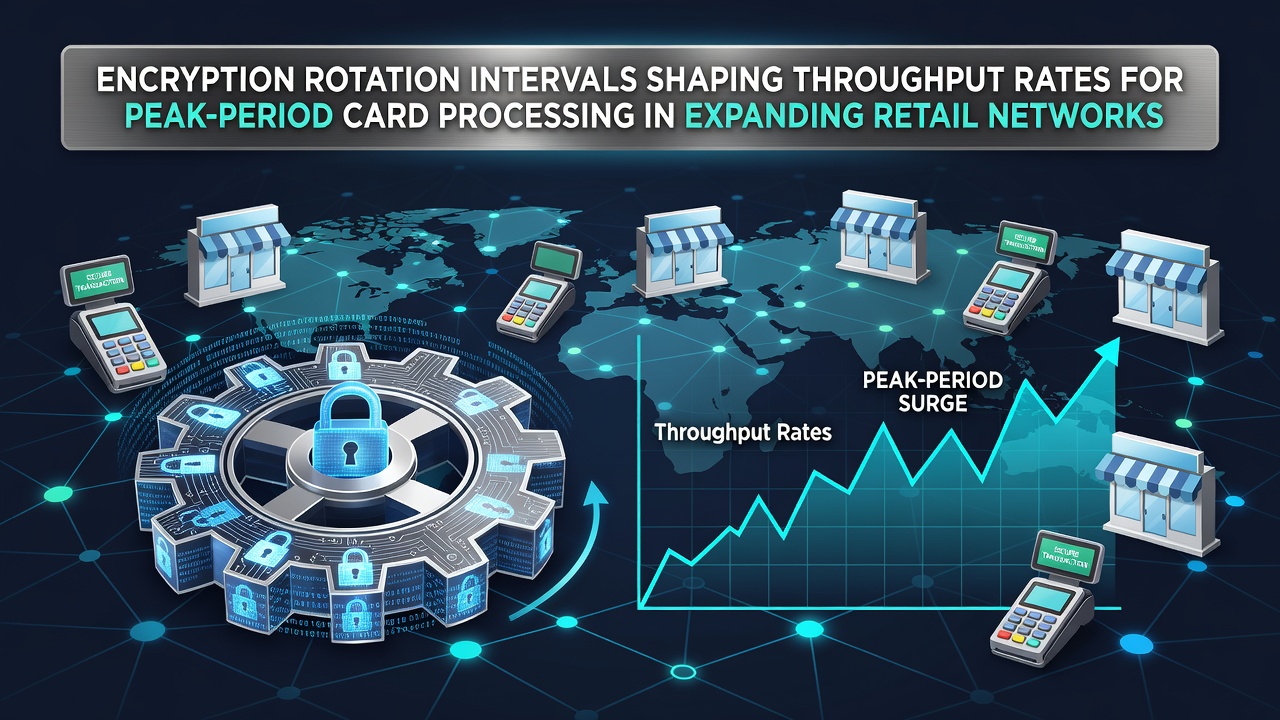
Retail networks that expand across multiple locations face steady increases in card transaction volumes, and encryption rotation intervals play a direct role in how quickly those transactions move through processing systems during busy periods. Key rotation involves replacing cryptographic keys at set intervals to maintain security standards, yet each rotation requires processing overhead that can reduce available throughput when networks handle thousands of authorizations per minute. Observers note that intervals set too short create repeated interruptions, while longer gaps between rotations allow systems to maintain steadier performance under load.
Core Mechanics of Key Rotation in Card Processing
Payment processors apply symmetric and asymmetric encryption to card data at multiple points, including authorization requests and settlement batches, and rotation schedules follow guidelines from standards bodies such as the PCI Security Standards Council. When a new key activates, terminals and gateways must synchronize, which consumes CPU cycles and memory that would otherwise handle transaction validation. Data from industry monitoring shows that rotation events lasting several milliseconds each can accumulate during peak windows, especially when retail chains add new stores and transaction counts rise by 30 to 50 percent compared with baseline figures.
Throughput Effects During Peak Retail Hours
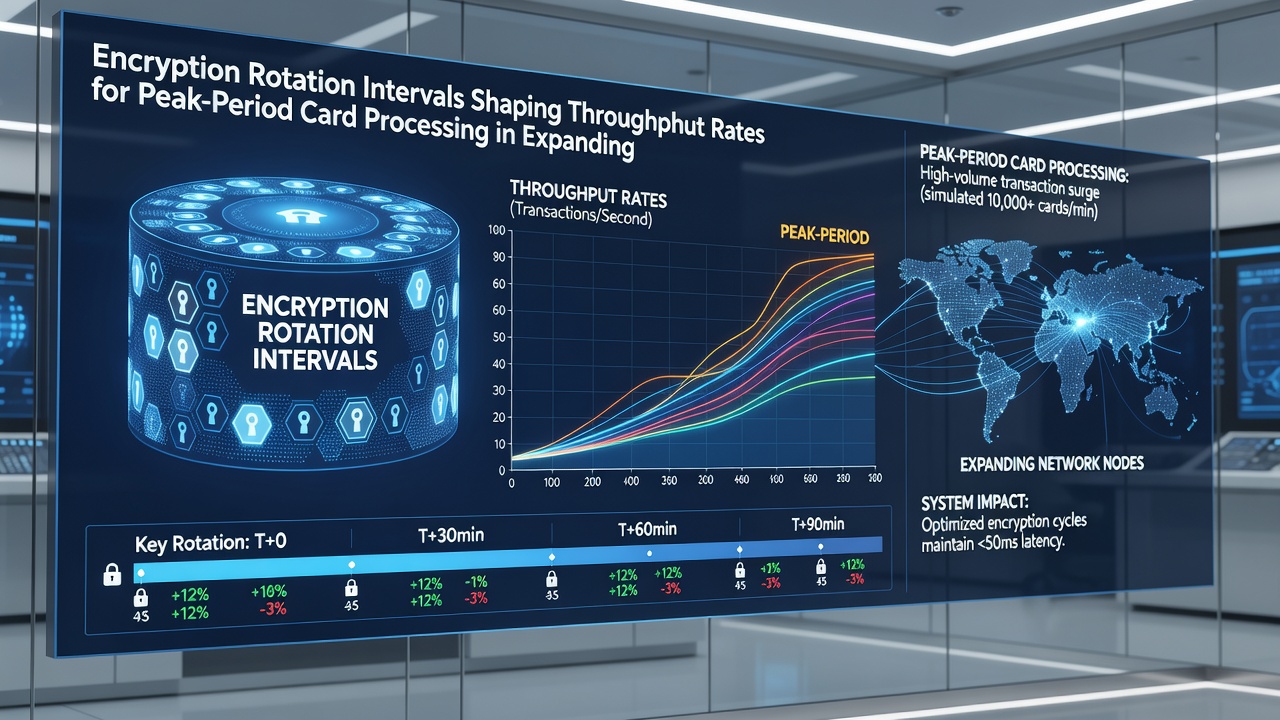
Peak periods typically occur between 5 PM and 8 PM on weekdays plus weekend afternoons, when card swipes and taps spike across expanding networks. Shorter rotation intervals, such as every 24 hours, force more frequent key exchanges that delay batch approvals by small but measurable amounts. Researchers tracking live environments report average throughput drops of 12 to 18 percent when rotation coincides with these surges, because each exchange triggers re-authentication sequences across acquirer connections. Longer intervals, often set at 72 or 96 hours, reduce those interruptions and let systems sustain higher authorization rates, although they require stronger monitoring to detect potential key compromise.
Network Expansion and Added Complexity
As retail operators open additional outlets, they integrate new point-of-sale devices that must align with existing encryption policies. Each added terminal increases the number of simultaneous key handshakes required during rotation windows, and this scaling effect becomes pronounced once networks exceed 200 locations. Studies conducted by payment infrastructure teams indicate that rotation traffic can consume up to 8 percent of total bandwidth during high-volume events when device counts grow rapidly. Systems that stagger rotation across geographic clusters rather than applying a single network-wide change show better retention of throughput, because localized updates avoid simultaneous spikes in key management server load.
September 2026 Projections and Scheduling Adjustments
Industry forecasts prepared for September 2026 anticipate further growth in contactless volumes as more retail chains complete multi-region rollouts. Those projections include updated recommendations from NIST on key lifecycle management that encourage dynamic interval adjustments based on real-time transaction density. Processors testing variable schedules have measured throughput improvements of 9 to 14 percent when intervals extend automatically during predicted peak windows and shorten only during lower-volume overnight periods. Such adaptive approaches rely on telemetry from acquirer gateways to trigger changes without manual intervention.
Observed Patterns Across Retail Segments
Grocery and convenience chains that operate 24-hour locations experience overlapping peak windows across time zones, which compresses available rotation flexibility. In contrast, department store networks with defined operating hours can schedule rotations during closed periods, preserving daytime throughput. Reports compiled by the European Payments Council highlight that European operators using 48-hour intervals maintained authorization success rates above 99.2 percent even when daily volumes increased by 40 percent year over year. North American counterparts employing similar intervals recorded comparable stability once they implemented regional staggering protocols.
Technical Trade-offs and Monitoring Requirements
Shorter rotation intervals strengthen security posture by limiting the window for potential key exposure, yet they introduce measurable latency that compounds when retail networks handle multi-currency or cross-border card traffic. Longer intervals ease throughput pressure but demand continuous anomaly detection to maintain compliance. Monitoring platforms now track key exchange duration alongside authorization latency, allowing operators to correlate rotation events with throughput dips in near real time. When those correlations exceed defined thresholds, systems can flag the need for interval recalibration without disrupting live processing flows.
Conclusion
Encryption rotation intervals directly influence the speed and reliability of card processing during peak periods in expanding retail networks, with data indicating that interval length and scheduling approach determine how much throughput remains available under load. Operators who align rotation timing with traffic patterns and regional device growth maintain steadier authorization rates, while rigid schedules can create recurring bottlenecks. As networks continue to scale into 2026, the relationship between rotation frequency and transaction handling capacity will remain a central factor in maintaining consistent performance across diverse retail environments.